


Beyond the Machine: 4 Surprising Truths Behind Arsenal’s Title Charge: Arsenal
It’s no secret that Arsenal are now regarded as the clear favorites to win the Premier League. Many point to their squad depth and recent wins. But the real story of their dominance is more complex. We dig deeper to uncover four surprising truths about their success. Seasoned experts have analyzed these insights.
The Set-Piece ‘Problem’ is actually a superpower.
A common criticism of Arsenal is their heavy reliance on set pieces. Statistics back this up: 11 of their 16 Premier League goals this season came from set pieces. Some have pointed to this as a sign of weakness in open play, a flaw in the machine’s design.
This analysis misses a key point: the difference between a crutch and a weapon. Pundit Paul Merson says this isn’t luck. It’s a smart tactic from Arsenal, showing their strong presence. The causal chain is clear: their dominance made opponents sit back with “10 behind the ball.” This, in turn, limited chances for open play. In this tough environment, mastering set pieces is a key tool in their “armoury.” It’s meant to break down strong defenses. Mikel Arteta knows the team welcomes any tactic that helps them win.
“A lot of things that we do… I’m sure teams will pick them. We do the same with other teams. The best teams… are doing certain things. If we can gather information and then adapt it to your own team… if you find that this could help… to win more matches, [it is] more than welcome.”
They’ve built a fortress so strong, opponents can’t even get a shot. Arsenal
This weapon is effective because it has a strong, almost legendary defense behind it. Arsenal’s title run relies on a strong defense. This unit is the heart of the team. They have become a team that is “so hard to beat” that, as pundits note, it feels “impossible for them to lose.”
This shows a deeper strategy. It’s about slowly suffocating the opposition until they submit. Their defensive skills are impressive. Some say teams “don’t even have a shot against them.” This strong defense alters the game in every match. It creates a strong efficiency where Arsenal often needs “one goal to win a football match.”
They’re winning the psychological battle, echoing a legendary past.
This strong defense gives off a powerful vibe. It reminds many of the famous “1-0 to the Arsenal” team from 1991. That team took the lead and held on tight. Once this Arsenal team scores, the game feels “over.” Opponents know it’s tough to break them down, and that’s demoralizing.
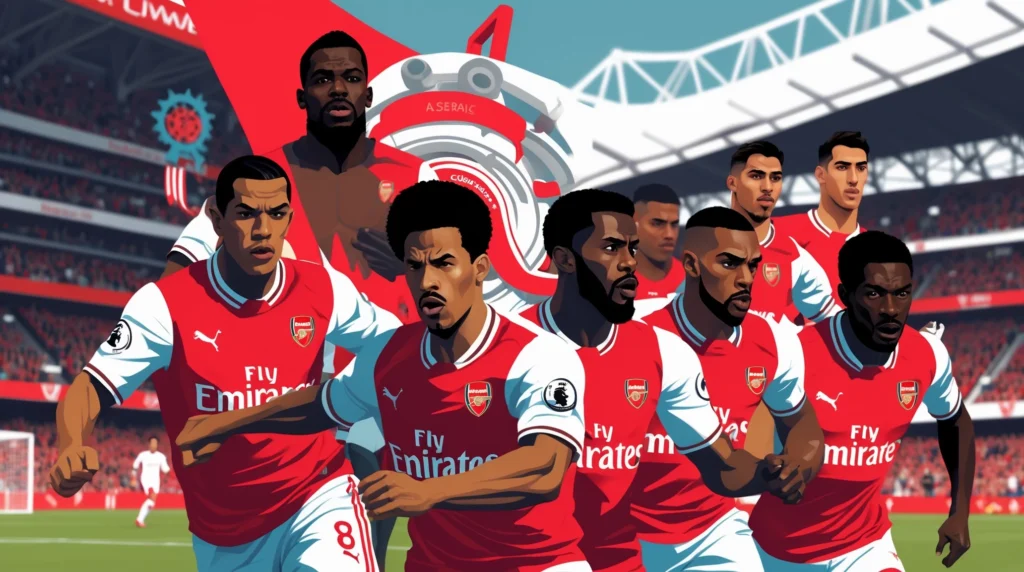
This isn’t an abstract comparison for Paul Merson; it’s a memory. He was a key player on the legendary 1991 team. He remembers how their reputation had a profound impact on their opponents. It’s not punditry; it’s a chilling recollection from inside the juggernaut.
“As soon as we scored and celebrated, we were walking back, and you see the faces of the other team… They knew that someone had beaten them. They knew ‘we can’t win now, that’s it’.”
Arteta’s masterstroke is building unshakeable belief.
Mikel Arteta has engineered a crucial shift in the club’s mentality, starting with his own. He now embraces the “noise” and pressure of being favorites. This shows a strong message of confidence. This is very different from managers who downplay expectations. That tactic can reveal a lack of belief in the players without intending to do so.
The scale of this cultural transformation is profound. Five years ago, experts called Arsenal “also-rans.” They were struggling to make the top four. Arteta has turned them into “massive players in the Premier League.” But Wayne Rooney thinks Arteta could face trouble without a title. Analysts quickly dismissed this idea as unfeasible. They emphasized “no, no, no” because they understand the depth of the rebuild.
——————————————————————————–
Arsenal’s dominance, then, is no accident. It’s a strong mix of tactical intelligence born from need. It offers a strong defense. It boosts morale with its legendary history. Plus, the manager fosters a winning mindset. These truths guide their campaign and pose a key question: With a solid base, is winning really the goal? What challenges could they face?