

Dead Ball Dominance: 5 Surprising Truths About Football’s Set-Piece Revolution : The Crucial
1.0 Introduction: The Unsung Heroes of the Beautiful Game
We love celebrating goals from fluid, open play. Think of the quick counter-attack, the pass that splits defenses, or a brilliant solo run. These moments define football’s aesthetic appeal. Yet, at the highest levels of the sport, a data-driven coup is underway. The game’s key moments now happen more from a dead ball than in motion. The corner kick, free kick, and throw-in are key areas in the analytical arms race.
Set pieces, once an afterthought, are now finely tuned. They turn simple restarts into well-planned plays that capitalize on small advantages. This is the tale of how a major blind spot in football turned into a hotly debated issue. Here are five key points from experts on why dead-ball dominance exists.
2.0 Takeaway 1: From Friday Afterthought to a Full-Time Obsession
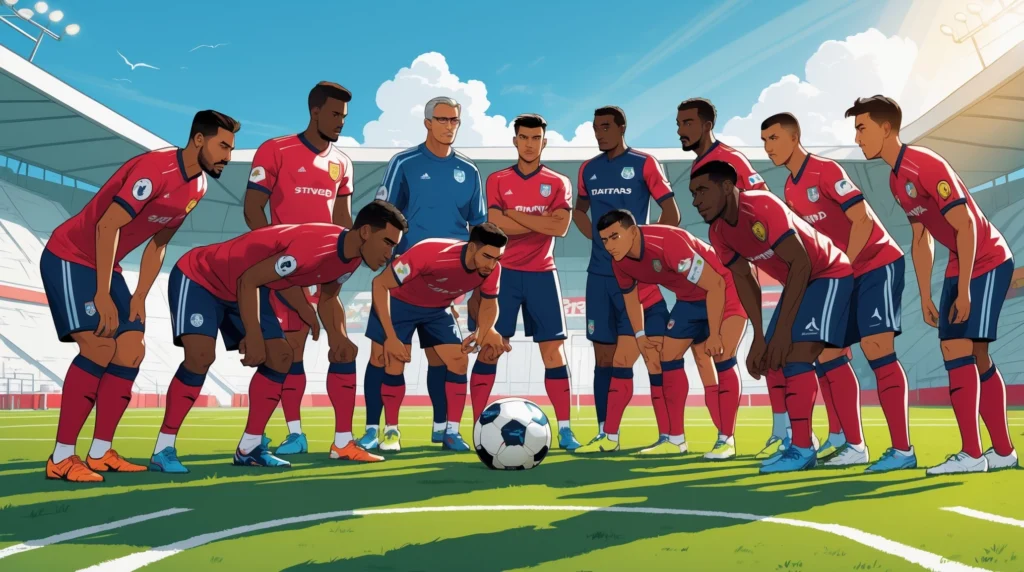
The casual Friday morning run-through of corners is a relic of a bygone era. In today’s top teams, that quick practice is now an obsession. Teams spend sessions on set plays three or four times a week.” A new, highly specialized role embodies this operational shift: the dedicated set-piece coach.
A decade ago, these duties might have fallen to a goalkeeping coach. Today, this role is essential on modern teams. Specialists fill it. They craft complex attack plans and defensive setups with great precision. Coaches like Thomas Frank show this trend. He was “massive on set piece at Brentford” and now brings that same focus to Tottenham. Former Premier League player Ashley Young says this level of preparation is now a must, not a choice.
…set pieces are crucial now. Um, whether that’s defending them or attacking them as well.
3.0 Takeaway 2: The Comeback Tactic That Beat “Snobbery” : The Crucial
If set pieces are so potent, why were they ever dismissed? The answer lies in a common “snobbery.” It once ranked dead-ball specialists in a lower tactical group. Teams like Tony Pulis’s Stoke City were known as a “set-piece team.” This was largely due to Rory Delap’s powerful long throws.” This label suggested they lacked skill in open play.
This blind spot was so profound that it affected even the sharpest football minds. Jamie Redknapp recalls playing with Rory Delap and Peter Crouch at Southampton. Crouch stands at 6’7″. His father, Harry Redknapp, was the manager there. They completely missed the potential “edge” that this combination offered. The stigma is gone. This change happened mainly because clubs like Arsenal excelled at set plays. Their success validated the approach. It showed that mastering dead balls is a sign of elite coaching, not a fallback for less talented players.
It was like you say, a bit of snobbery. Some people say, “Oh, Stoker, just a set-piece team.” But now, look at how many teams score from set pieces. They use long throws and get the ball into the box. Nobody’s really looking at it as a snobby way. the crucial
4.0 Takeaway 3: The Coaching Paradox—Better Defending, Yet More Goals
The rise of specialist coaches brings up an important question: If teams defend set pieces well, why do they still concede so many goals? It’s an innovation cycle in which the offense currently maintains the upper hand. Some defensive systems are tough to beat. At the time of recording, Man City and Everton had let in no set-piece goals. Spurs had only conceded one. But attackers are finding ways to create problems that are harder to fix.
A long throw-in, for example, poses a greater defensive challenge than a corner. Its flat, complex path makes sure the ball lands in a risky area, creating chaos. A looping corner can be handled with one strong header. In contrast, a throw-in creates a scramble where “the ball is always in the box.” This makes it much harder to clear the defense cleanly. Offensive coaches are innovating faster than defensive systems can adapt. the crucial
5.0 Takeaway 4: Football’s “Follow the Leader” Mentality
The rise of the set-piece coach shows more than just analytics success. It highlights how football follows trends. The initial snobbery was a barrier. Then, when an elite club like Arsenal made it cool, everyone wanted to join in. One pundit says managers are “a bit like sheep.” When one tactic works, the rest follow. This creates a “new norm.””
This behaviour extends beyond staffing.
The standard kick-off routine includes:
- A pass back to the keeper
- Blocking players
- A long ball forward
This became a near-universal fad. In a high-pressure sport with tiny margins for error, tactical mimicry serves as a way to avoid risks. Failing with a regular method is easier to explain than failing with an unusual one. A coach who ignores set-piece specialization loses a tactical edge. They may also be seen as a “dinosaur.” the crucial
6.0 Takeaway 5: High-Tech Tactics Still Rely on Old-School Basics
Success in any set piece comes down to two simple basics. These old-school rules matter, even with all the fancy analytics and moves. Without them, the most elaborate strategy becomes useless.
First is perfect execution. The delivery from the taker must be “absolutely on the money.” A corner kick that doesn’t clear the first defender is wasted. The same goes for a free kick that ends up in the stands. No clever plays can fix that. Second is raw physicality. A team needs players who are tall or can jump high to win aerial duels. This is very important. This goalkeeper takes charge of their area. They confidently handle crosses to ease pressure. Basic skills are key for set-piece success, no matter how advanced the game becomes.
7.0 Conclusion: What’s the Next Edge?
The evidence is irrefutable. The once-neglected set piece has been elevated into a decisive, hyper-specialized battleground. It’s a game within a game. Specialists plan and execute it with precision. They look for small advantages that can decide championships. A simple restart now shows a club’s strategic and analytical skills. the crucial
This evolution reveals a relentless drive toward specialization that is reshaping the sport. It makes us wonder: If data can track every blade of grass, what will fuel the next change in football set-pieces?